

Deciding between veneers vs crowns vs bonding usually comes down to a single question: how much of the tooth needs support? All three treatments sit over your natural teeth, and all three can change how a tooth looks. They were designed for different situations, though, and they involve the tooth underneath to very different degrees.
That distinction matters, because the three are not interchangeable. A front tooth with a chipped corner and a molar that has cracked through to the nerve are not in the same situation, so treating them the same way tends to create more work later. Each of the three has a place, and the option that fits depends on how much tooth structure is left, what you want to change, and how your bite behaves.
Below, we walk through what each treatment is, how much natural tooth is involved, which concerns each one suits, how many visits to expect, and what upkeep and cost look like. If you are weighing up porcelain and composite veneers, this should help you arrive at your consultation with the right questions ready.
Quick Overview
- Bonding, veneers and crowns are all fixed to the tooth, but they cover different amounts of it: a small area, the front surface, or the entire tooth.
- Enamel removal increases as you move from bonding to veneers to crowns, and enamel does not grow back once it is gone.
- Bonding suits minor cosmetic fixes, veneers suit changes across the front surface of several teeth, and crowns restore teeth with significant structural damage.
- Composite resin is shaped in the chair in one visit, while porcelain veneers and crowns are made in a dental laboratory and usually need two visits.
Which option fits you depends on your own teeth, your bite and your oral health, and that is what an assessment is for.
What are veneers, crowns and bonding?
Veneers are thin covers fixed to the front surface of a tooth. Crowns are shells that fit over the entire tooth. Dental bonding is tooth coloured composite resin applied straight onto the tooth surface and shaped by hand. All three can be used as cosmetic dental treatments, and each is matched to the shade of the teeth around it.
Dental veneers are made from porcelain or composite resin. Porcelain veneers are custom veneers, made outside the mouth and then bonded into place. Composite veneers are built up on the tooth directly, using the same tooth coloured resin used for white fillings.
Dental crowns can be made from porcelain, zirconia, gold alloy, or a combination of porcelain and metal. Because a crown covers the whole tooth rather than only its front, it can protect a tooth weakened by decay or a large old filling. A veneer is not designed to do that.
Composite bonding is the smallest of the three procedures. Your dentist prepares the tooth surface, places the resin in layers, hardens each layer with a special light, then trims and polishes it so the finish sits comfortably against the tooth around it.
How much of your natural tooth is involved?
Bonding usually needs the least tooth preparation. Veneers require a thin layer to be taken from the front surface so the material sits flush. A crown needs reduction around the entire tooth, across the top and all sides. Enamel removal cannot be undone, so this is the difference worth understanding first.
Tooth bonding is the most conservative option. The tooth surface is lightly prepared so the resin grips, and in many cases very little natural enamel is lost. It leaves more of your own tooth intact than the other two options do.
Veneers sit in the middle. They are thin, so not much tooth structure has to be cut away, but the front surface is still altered, and that change cannot be undone.
Crowns involve the most tooth preparation. A layer is taken from the top and all the way around, and in some cases that reduction can come close to the nerve and blood vessels inside the tooth, which may mean root canal treatment is needed as well. Because that reduction cannot be reversed, the tooth stays reliant on a crown from then on.
This is why the choice is never purely about appearance. Natural enamel cannot be replaced once it is removed, so a dentist will usually consider the most conservative option that can do the job before moving to a more involved one.
Which dental concerns suit each treatment?
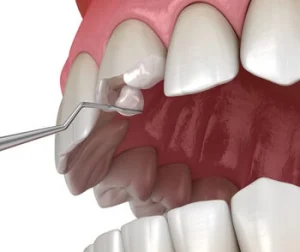 Bonding suits minor cosmetic fixes: a chipped edge, small gaps, a worn corner, or a single tooth sitting slightly out of line. Veneers cover the entire front surface, so they suit discoloured or uneven teeth where several teeth need to match each other. Crowns restore teeth with significant structural damage.
Dental bonding is often the practical choice when the cosmetic concern is contained. Closing minor gaps, rebuilding a chipped biting edge and reshaping a tooth that looks shorter than its neighbour are all everyday uses, and because the work is done in the chair, it is usually the more affordable fix.
Veneers make more sense when the change needs to run across the whole visible surface, or across several adjacent teeth at once. Shade, shape and small gaps can all be addressed together, which is more than bonding on a single tooth can achieve. What veneers do not do is straighten teeth or correct a bite, so if alignment is the underlying issue, we would talk about orthodontic treatment first.
Crowns do a different job. They are used where a large old filling, a crack or heavy wear has left too little sound tooth to support a veneer, and they are also commonly placed after root canal treatment, particularly on premolars and molars.
One point applies to all three. We treat active decay and gum disease before any cosmetic dentistry begins, because a new surface placed over an unhealthy tooth or gum will not last.
How many visits does each treatment take?
Dental bonding is usually completed in one visit, shaped and set while you are in the chair. Porcelain veneers and crowns are made in a dental lab from an impression or a 3D scan, so they normally take two appointments, with temporary veneers or a temporary crown worn in between.
A bonding appointment is self-contained. Your dentist chooses the shade, prepares the surface, builds the resin up in layers, cures it, then shapes and polishes. Composite resin is often used where appearance matters, which is what makes it a workable option for front teeth in one visit.
Porcelain veneers and crowns run over two appointments. At the first appointment, the tooth is prepared, and its shape is recorded; then a technician in the dental laboratory makes the restoration to that prescription. At the second appointment, it is tried in, adjusted and cemented. The temporary you wear in between protects the prepared tooth and keeps it settled while the laboratory works.
Composite veneers fall between the two. They are built directly on the tooth, so there is no laboratory stage, but covering several teeth takes a longer appointment and sometimes a short review afterwards.
How long do these options last, and what upkeep do they need?
Porcelain is more stain-resistant than composite, because its surface is less porous. Tooth coloured restorations can pick up stains from certain foods, drinks and tobacco over the years, and may need polishing or replacing as a result. Grinding and biting hard objects increase the risk of chipping and cracking.
For veneers, the amount of natural enamel left underneath has a direct bearing on how long they last. Research shows that keeping more enamel supports veneer survival, that fracture is the most common reason a veneer fails, and that grinding raises that risk further.
Crowns tend to be the most hard-wearing of the three, because they cover the entire tooth and can be made from materials chosen for strength, such as zirconia or gold alloy. Bonded teeth need more frequent maintenance than porcelain, so they need reviewing more often.
With proper care, these restorations can last well, but none of them stops a tooth from decaying. The tooth underneath can still develop decay at the margin, which is why we keep reviewing it. Results also vary between patients, because bite, habits and oral health all feed into how any restoration performs.
What shapes the cost of veneers, crowns and bonding?
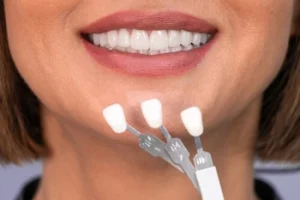 Dental bonding cost is usually the lowest of the three at the outset, because there is no dental laboratory stage and the work is finished in one appointment. Veneers cost more when they are made from porcelain, and crowns sit in a similar range, since both involve laboratory time, stronger materials and two visits.
Beyond the material, the cost depends on the number of teeth treated, how complex the shade and shape work is, and whether the tooth needs other treatment first.
The upfront cost is only part of it. Bonding is cheaper to place, but composite is replaced sooner than porcelain, so a like-for-like comparison needs to account for how often each option is likely to be renewed.
Dental insurance is worth checking early. Cover varies between funds and levels, and restorative items such as crowns are more often claimable than work considered cosmetic. A written treatment plan with the relevant item numbers lets you check what your policy will pay before you go ahead.
Talk to Boutique Dental Care about veneers, crowns or bonding
Choosing between these three is far easier once we have looked at the tooth, checked how your bite comes together, and heard what you want to change. At Boutique Dental Care, our dentists assess how much tooth structure is left, take a 3D scan where it adds useful detail, and set the conservative options next to the more involved ones so you can weigh them up properly. We will also tell you plainly when bonding is enough, and a veneer or crown is not needed. To talk through which option suits your tooth, please call us on (02) 9054 5281.
Frequently Asked Questions
Can I start with bonding and move to veneers or a crown later?
Yes, and that is a common sequence. Because bonding removes very little tooth structure, it can serve as a temporary solution while you decide, or while other treatment such as orthodontics is finishing. Moving up to a veneer or crown later is still possible, and we can talk you through what each step would involve when the time comes.
Will teeth whitening change the colour of veneers, crowns or bonded teeth?
No. Whitening gel lightens natural enamel, and it has no effect on porcelain or composite resin. If you are considering whitening as well, it is worth doing that first and letting the shade settle, so any veneer, crown or bonding can then be matched to the lighter result rather than the shade you had before.
Can a chipped veneer, crown or bonded tooth be repaired, or does it need replacing?
It depends on the material and the size of the chip. Composite can often be repaired directly in the chair, since fresh resin bonds readily to what is already there. Porcelain is harder to repair in the mouth: a very small chip can sometimes be smoothed and polished, while a larger one usually means the veneer or crown is remade.
Can I have veneers or bonding on just one tooth?
Yes, a single tooth can be treated on its own, and that is often what is needed after a chip or a knock. The harder part is shade matching, because one new surface has to sit convincingly beside natural teeth that have their own colour and translucency. Where several teeth already differ from each other, treating them as a group can give a more even result.
How should I clean bonded teeth, veneered teeth and crowns at home?
Brush twice a day with fluoride toothpaste and a soft brush, and clean between your teeth every day. Pay particular attention to the margin where the restoration meets the tooth, because that edge is where plaque gathers. Bring it to your check-up if a composite surface starts looking dull, since a stained surface can often be polished at the practice.
References
https://www.healthdirect.gov.au/veneers
https://orthodonticsaustralia.org.au/braces-vs-veneers