

Clear aligner attachments are something many people only discover when they start researching Invisalign or other aligner systems. If this is the first time you have come across the term, you are not alone.
Clear aligner attachments are more common than most patients realise, and understanding what they do and what to expect makes the treatment experience significantly easier to navigate.
Quick Overview
- Clear aligner attachments are small tooth-coloured shapes bonded to specific teeth during aligner treatment, though not every patient will need them.
- They give the aligner tray something to grip and push against, enabling more precise tooth movement than the aligner alone may not achieve.
- Whether attachments are needed depends on the complexity of tooth movements required in your treatment plan.
- Attachments are temporary and are removed once treatment ends, leaving no permanent change to the teeth.
Below, we explain how attachments work, what wearing them involves day to day, and what happens when they are removed.
What Are Clear Aligner Attachments?
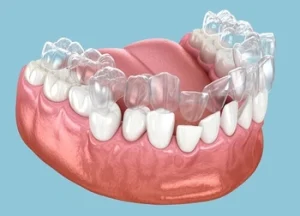 Clear aligner attachments are small raised shapes made from composite material, the same tooth-coloured resin used in dental bonding. They are bonded to the surface of specific teeth at the start of, or during, clear aligner treatment.
Invisalign aligners and other clear aligner trays are made from a flexible, clear plastic material, which has limits in terms of the pressure and direction of force it can apply to teeth on its own. Think of attachments as small handles that give the aligner something to grip and anchor against, allowing it to apply more targeted pressure to guide the tooth in a specific direction.
Invisalign attachments come in different shapes: rectangular, ellipsoid, and bevelled, among others. Each shape is designed to support a different type of tooth movement. Rectangular shapes tend to support rotation and vertical movements, while bevelled shapes assist with root positioning. Your dentist selects attachment shapes based on the specific tooth movements your treatment requires, as determined by your custom-made treatment plan.
Who Needs Clear Aligner Attachments?
Not everyone needs attachments. Most patients with straightforward tooth movements can complete clear aligner treatment without them. Attachments are typically recommended when:
Complex tooth movements are required
Complex tooth movements such as rotation, significant vertical shifts, or precise root positioning can exceed what a tray alone can reliably achieve. Attachments provide extra grip and the leverage needed to guide teeth through these more demanding movements.
Rubber bands are part of the treatment plan
Some treatment plans use rubber bands alongside aligners to correct bite issues. In these cases, attachments on specific teeth act as anchor points for the elastics, providing a stable surface for the bands to connect to. This is similar in principle to how rubber bands work in traditional braces, though the overall appearance remains far less noticeable and the aligners remain largely invisible to others.
The treatment involves complex cases
Where alignment needs are more involved, aligner systems rely on attachments to manage movements that would otherwise require traditional braces. Invisalign treatment uses attachments specifically to extend the range of complex treatments that clear aligners can address.
What Does Wearing Attachments Feel Like?
Most patients find that attachments cause minimal disruption once they have adjusted to them. Here is what to expect:
At placement
Attachments are bonded to the teeth without any drilling or injections. The dentist applies a small amount of composite material to the tooth surface, shapes it, and sets it with a curing light. Once attached, the shape sits flush against the tooth. The process takes a short time, and most patients experience no discomfort during placement.
Day to day
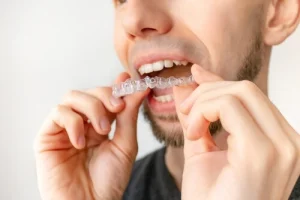 Once the aligner tray is in place over the attachments, most people notice very little. The attachments sit under the tray and are barely noticeable when the aligners are being worn. Without the tray in, they are visible as small raised bumps on the tooth surface but are tooth-coloured and blend with the natural appearance of the teeth in most cases.
Eating with aligners removed is unaffected by attachments. Some patients notice slight irritation to the lips or cheeks in the first few days as the mouth adjusts. This typically settles as the soft tissue adapts. If irritation persists, dental wax can be applied over the attachment to reduce friction.
Some discomfort or pressure when switching to a new aligner tray is normal and generally settles within a few days. This discomfort is similar to what most patients experience during aligner treatment without attachments and reflects the teeth adjusting to the next stage of movement.
Oral hygiene with attachments
Brush carefully around each attachment as food and plaque can collect around the edges. Flossing remains important throughout treatment and takes a little more care around the bonded attachment surfaces.
What Happens When Attachments Are Removed?
With attachments removed at the end of treatment, the composite material is gently polished from the tooth surface, and the teeth are buffed smooth. Removing attachments is straightforward, requires no anaesthetic, and leaves no permanent change to the tooth. Retainers are usually fitted at the same appointment to maintain the positions achieved during treatment.
Ready to Find Out If Clear Aligners Are Right for You?
Boutique Dental Care offers Invisalign clear aligners and clear aligner treatment in Chatswood and can assess whether attachments are likely to be part of your individual treatment plan.
To find out whether clear aligner treatment suits your situation, please call us at (02) 9054 5281 or arrange a consultation online.
Individual outcomes from clear aligner treatment vary depending on the complexity of tooth movements required, adherence to wearing the aligners as directed, and how well the treatment plan is followed throughout.
Frequently Asked Questions
Will attachments make my aligners harder to remove?
Yes, slightly. The extra grip means a little more resistance when taking the tray out, but most patients adjust within a few days. Your dentist can demonstrate the correct removal technique to make the process more comfortable.
 Can attachments come loose during treatment?
Attachments coming loose are an occasional issue, particularly when hard or sticky foods are eaten with the aligners out. If an attachment comes loose during treatment, contact our practice so it can be rebonded. A missing attachment means that the aligner tray is not receiving the grip it needs from that tooth, which can affect the accuracy of tooth movement at that stage of treatment.
Are attachments used with all clear aligner brands?
Attachments are used across most major aligner systems, not just Invisalign. The approach varies slightly between aligner systems in terms of the specific materials and shapes used, but the underlying principle of using bonded composite shapes to provide extra grip and guide tooth movement is common across clear aligner treatment more broadly. Your dentist will explain which approach applies to your specific treatment plan.
Do attachments stain?
Composite material can absorb some staining over time, particularly from coffee, tea, red wine, and certain foods. The degree of staining varies between patients. Keeping the aligner tray in for the recommended hours each day reduces direct exposure of the attachment surface to food and drink. Good brushing habits also help maintain the appearance of the attachments throughout treatment.
References
https://journals.lww.com/joos/fulltext/2024/05080/efficacy_of_clear_aligner_therapy_over.23.aspx
https://pmc.ncbi.nlm.nih.gov/articles/PMC12485647/