

Can immediate dentures be permanent? It is one of the first questions worth asking before a tooth extraction. Immediate dentures are made in advance and fitted on the day your teeth are removed, so you are not left without teeth while your gums heal. They are designed to carry you through the healing period rather than to act as your final denture, because your mouth changes shape underneath them. If you are weighing up denture options for missing teeth, it helps to know that the denture you finish with is usually not the one you start with.
Quick Overview
- Immediate dentures are made before your extractions and go in the same day.
- Bone and gum tissue shrink as the sockets heal, which changes how the denture sits.
- A conventional denture is usually made once healing settles, although relines can keep the first one fitting for longer.
- Looseness, slipping and sore spots are signals to book a review rather than wait them out.
Below, we explain what a permanent denture means, why your mouth keeps changing, what the process involves, and how the two types compare.
Can immediate dentures be permanent?
Immediate dentures are not made to be your permanent set. They are placed straight after tooth removal to hold your appearance and chewing while your gums heal, and are usually followed by permanent dentures made once the tissues have settled.
A denture meant to last is made after your mouth has fully healed, when impressions can capture the exact shape of your ridge. An immediate denture is made earlier, from impressions taken while your teeth are still in place, so the fit anticipates how your gums will heal rather than matching the final result. Immediate dentures serve as a temporary solution, and the denture intended to last is made afterwards.
Why your mouth keeps changing after tooth extraction
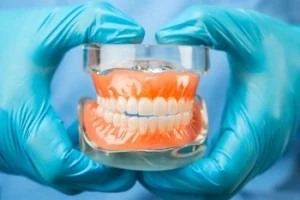 Bone and gum tissue reshape once a tooth is out. The socket fills in, the ridge narrows, and the surface your denture rests on flattens. Most of it happens early, exactly when you are wearing temporary dentures.
Bone loss after tooth removal is greatest in the first three months, and continues more slowly across the first year. Gum tissue follows the bone as the healing process runs its course. You may notice a denture that felt snug at first starting to rock or trap food. The oral structures beneath it are still settling, which is why the first denture is not treated as the last.
What happens when you get an immediate denture
Getting immediate dentures involves several appointments, starting before your extractions. At your initial consultation, your dentist examines your remaining natural teeth and gums, and discusses whether it suits you. Impressions are taken at that first appointment, while your teeth are still in place, and the denture is custom-made to match your bite and tooth colour.
On the day, your teeth are removed, and the denture goes into your mouth immediately, so you are not without teeth at any point. Follow-up appointments begin soon afterwards. Over the following months, your dentist makes the necessary adjustments that keep the fit comfortable, including relines that add material to the base as the ridge shrinks. Frequent adjustments early on are expected, not a sign of trouble. An immediate denture may need relining within months, and some are remade once healing finishes.
Immediate dentures compared with conventional dentures
The difference is timing. Immediate dentures are placed immediately after your teeth come out. Conventional or traditional dentures are made a few months later, once your gums have settled, which means a period without teeth in between.
Both are removable tooth replacements, and both come as partial dentures where some natural teeth remain, full dentures for one jaw, or complete dentures for both. Immediate dentures provide immediate use, protect the sockets, and spare you a visible gap. Conventional dentures offer a closer starting fit because they are made against healed tissue. Both have several benefits, and the right denture solution depends on how many teeth are coming out and the state of your gums.
Can you keep wearing an immediate denture long term?
 Some immediate dentures are kept and maintained with relines and reviews, while others are remade once the ridge has settled. The deciding factors are how much shrinkage occurs and whether the base can still be adapted to a proper fit.
A denture that no longer fits does more than feel loose. It can rub, and you may experience soreness, ulcers or inflamed gum tissue where the base presses unevenly. A denture should never be adjusted at home, because reshaping the base yourself tends to worsen the fit. Book a review instead. Proper care matters for the rest of your mouth. Brush your remaining teeth morning and night, and leave the denture out overnight so the tissue underneath can rest. Whether it becomes a long-term solution depends on your oral health and on keeping up with your reviews.
Talk to Boutique Dental Care about your denture plan
Losing teeth is a significant step, and the months that follow are easier when the plan is mapped out early. At Boutique Dental Care, we assess your teeth and gums, talk through whether an immediate denture suits your situation, and look after the adjustments and reviews that follow. We will explain what to expect at each stage, at a pace that suits you. To talk through dentures or a tooth extraction, please call us on (02) 9054 5281.
Frequently Asked Questions
Who is a good candidate for immediate dentures?
Immediate dentures suit patients whose teeth can be removed in a planned way and whose gums are in reasonable condition. We review your medical history, your gum health, and how many teeth are coming out, because each affects how the sockets heal. If healing looks likely to be unpredictable, waiting for a conventional denture can be the sounder option.
What can I eat while my gums heal?
Start with soft foods that need little chewing, and cut everything into small pieces. Chew on both sides at once where you can, since even pressure helps keep the denture seated. Hard and sticky foods are worth avoiding until your dentist confirms your gums have settled.
Will an immediate denture change how I speak?
In the early days, it often does. Certain sounds may feel awkward, and you might notice a slight lisp while your tongue and lips work out where the denture sits. Reading aloud at home each day gives them time to adjust.
What affects the cost of immediate dentures?
Cost depends on how many teeth are removed, whether the denture is partial or full, the materials chosen, and how many relines are needed. The second denture is a separate cost, so ask for both to be quoted at the start.
Can implant-supported dentures replace an immediate denture later?
In some cases, yes. Once your ridge has healed, dental implants can be placed to hold a denture more securely, and implant-supported dentures attach to those implants rather than resting on the gums. Suitability depends on how much bone remains, which is why we assess the ridge first.
References
https://teeth.org.au/dentures
https://www.healthdirect.gov.au/dentures