

Booking teeth clean and whitening together seems efficient, and the order they happen in changes the result. A clean and a teeth whitening treatment do different jobs on different parts of the tooth. Doing them in the wrong sequence wastes some of the second one. There is also a suitability question, because whitening teeth is only appropriate once an examination has ruled a few things out. In this blog post, we cover what each treatment does, why the clean comes first and what has to be sorted beforehand.
Quick Overview
- A clean removes plaque and surface stains sitting on the tooth, while whitening changes the colour of the tooth structure itself.
- Whitening over an unclean tooth means the gel is working through a film instead of contacting enamel evenly.
- Whitening is not recommended where there is gum disease, tooth decay, cracks or untreated dental problems.
- It also has no effect on fillings, crowns or veneers, which stay the shade they already are.
The two treatments work on different layers of the tooth, which is where the sequence comes from.
What a Clean Removes, and What Whitening Changes
A professional clean is mechanical. Using a scaler and a rotating brush, we remove plaque buildup, hardened deposits and the superficial stains sitting on the outside of the tooth. Tea, coffee, red wine, spices, berries and smoking all leave that kind of surface stain, and a clean lifts a good deal of it.
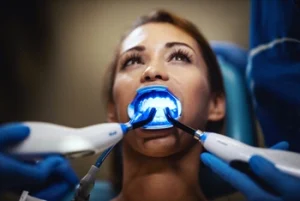 Professional teeth whitening is chemical. The teeth whitening procedure bleaches the tooth to lighten the colour of the tooth enamel itself. The whitening agents are usually hydrogen peroxide or carbamide peroxide in a gel. The whitening process changes the shade of the tooth structure instead of cleaning anything off it.
That distinction matters when you are deciding what you need. If your teeth look dull because of plaque and surface staining, a clean may be enough on its own. Getting your teeth cleaned is a recognised alternative to whitening. If the tooth structure has darkened, a clean will not change it, and that is where whitening applies.
Age is part of this too. Enamel thins over the years and exposes the yellower dentine beneath, which is tooth discolouration from within, not a stain on top.
Why the Clean Comes First
Contact is the first reason. A whitening gel needs to sit against enamel to work on it. Where plaque and stain are still present, the gel works through that layer instead. The amount reaching the tooth then varies across the mouth. Uneven coverage produces an uneven result.
The second reason is knowing your actual starting shade. Once the surface stains are removed, the colour underneath becomes visible, and that is the shade whitening begins from. Some patients find a clean alone gets them close enough to what they were after that whitening becomes optional. Assessing that before a clean is guesswork.
Timing helps as well. Gums can be slightly tender straight after a thorough clean, so leaving a few days before the whitening treatment reduces the chance of gum irritation from the gel.
What Has to Be Treated Before Whitening
Whitening is not recommended where you have gum disease, tooth decay, cracks or holes in your teeth, or other untreated dental problems. There are two reasons. Peroxide reaching exposed dentine through a crack or a cavity can cause pain, and inflamed gums are more prone to irritation from contact with the gel.
Poor oral hygiene is a related issue, not the same one. Where plaque is building up faster than it is being removed, whitening addresses the symptom and leaves the cause, so the staining returns.
A routine check before whitening is therefore not an upsell. It is how your oral health is assessed, covering decay, cracks and the state of your gums, and it is why our whitening consultations begin with an examination. Where we find something needing attention, that comes first, and the whitening treatment follows once your dental health is settled.
Whitening is also not recommended during pregnancy or breastfeeding, or where you already have sensitive teeth.
The Two Whitening Options
In-chair whitening uses Opalescence Boost, applied here at the practice in a single visit. Take-home whitening uses custom trays that you wear over a course of days at home.
The difference is timing rather than outcome. In-chair suits patients who want it done in one appointment, and take-home suits patients who prefer to spread it out. Take-home takes longer, and the final result is comparable.
Your dentist will recommend one after the examination, since the state of your teeth and gums affects which is appropriate.
How Existing Fillings, Crowns and Veneers Affect the Result
Whitening gel only lightens tooth enamel. Any dental work already in your mouth stays exactly the colour it was made. Porcelain crowns, veneers and composite resin fillings do not respond to the gel at all.
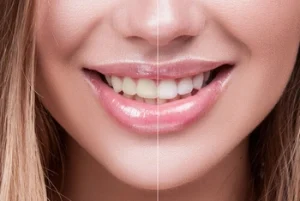 That matters more on front teeth than anywhere else. If you whiten the natural teeth around a crown, the crown can end up looking darker by comparison, even though nothing about it has changed. Where the difference becomes noticeable, your dentist may need to replace the restoration to match, which turns a whitening appointment into a larger piece of work. This is why we look at existing fillings, crowns and veneers before whitening is planned rather than after the shade has shifted.
The same limit applies to discolouration coming from inside a tooth. Where the cause sits within the tooth structure, a gel applied to the outside will not reach it. A tooth that has darkened following root canal treatment is the usual example. Internal bleaching is a separate procedure for that situation.
Enamel also has a natural shade limit, and however long you whiten your teeth, no gel moves them past it. What whitening does is lift accumulated discolouration to give whiter teeth, and brighter teeth overall, within the range your own enamel allows. Knowing that range beforehand is part of what makes the result predictable, and it is another reason the clean and the examination come first.
Book a Check and Clean Before Whitening
The order we recommend is examination, clean, then whitening, because each step informs the next. At Boutique Dental Care, we are members of the Australian Dental Association, and your dentist checks for decay, cracks and gum health at the appointment. Where something needs treating first, we will tell you before any whitening is planned. If you are considering whitening for an occasion, allow time for both appointments instead of booking them close together. To arrange a check and clean, please call us on (02) 9054 5281.
Frequently Asked Questions
Will whitening toothpaste do the same job?
No, and it works on a different problem. Whitening toothpastes and other over-the-counter teeth whitening products contain mild abrasives or whitening agents. Those reduce stains on the outside surface, so they overlap with what a clean does. They do not tend to change the actual colour of the teeth, and they can increase sensitivity.
Can I whiten if I have had a clean somewhere else recently?
Yes, though we will still examine your teeth first. The examination is not repeating the clean; it is checking for decay, cracks and gum health, which determines whether whitening is appropriate. Bring the date of your last clean and any recent X-rays if you have them.
How long do I need to avoid staining foods afterwards?
For the initial treatment period, limiting tea, coffee and red wine helps, since teeth take up stain more readily immediately afterwards. Beyond that, the habits keeping teeth clean are the ones keeping the result: brushing, flossing, and rinsing with water after anything that stains.
What if sensitivity continues after treatment?
Contact us for a check. Tooth sensitivity to cold and mild gum irritation usually settle within a day or two, so anything persisting beyond that is worth looking at rather than waiting out.
References
https://health.clevelandclinic.org/is-teeth-whitening-safe
https://www.hopkinsmedicine.org/health/treatment-tests-and-therapies/teeth-whitening