

A dry mouth is uncomfortable, and it is also one of the clearest warning signs we look for at a check-up. Saliva does more for your teeth than keeping your mouth moist, so when saliva flow drops, decay and gum disease risk rise with it. Dry mouth symptoms are often put down to a hot day or a poor night’s sleep. The condition is picked up at a check-up more often than at home. In this blog post, we cover the symptoms to look for, why saliva matters to your teeth, what causes it, and what helps.
Quick Overview
- Dry mouth, called xerostomia, is when your salivary glands do not produce enough saliva.
- Symptoms extend beyond a dry feeling to cracked lips, bad breath, mouth sores and thick saliva.
- Saliva protects teeth from decay, so a lasting drop in saliva flow raises decay and gum disease risk.
- Occasional dry mouth is common, while a persistent dry mouth needs looking into.
Below, we set out why a dry mouth changes what your teeth need, not just how your mouth feels.
The Symptoms to Look For
A dry feeling is the obvious one. The other symptoms of dry mouth are easier to miss, because you may not connect them to the same cause.
- Thick or stringy saliva. Saliva that feels thick, or coats the mouth instead of flowing freely.
- A rough or dry tongue. It can stick to the roof of your mouth or to your lips.
- Dry lips and cracked lips. Lips crack, and they may stick to your gums.
- Mouth sores. Mouth ulcers, bleeding gums, or oral thrush, which is a yeast infection of the soft tissues.
- Bad breath. Without enough saliva rinsing the mouth, food particles and bacteria linger.
- Difficulty chewing, swallowing or speaking. Food feels harder to move around, and speech can feel effortful.
- A burning sensation or sore throat. The soft tissues feel raw, and some toothpastes start to sting.
Dry mouth syndrome usually develops gradually, so the change is hard to date. Symptoms range from mild to severe, so a mild dry feeling and more severe symptoms are the same condition at different points.
Why Saliva Matters to Your Teeth
Saliva is not just water. It has several jobs, and losing it affects your teeth quickly.
Saliva keeps your mouth and throat moist, assists speech and swallowing, and protects your teeth from decay. Saliva washes away food debris, neutralises the acids bacteria produce, and carries the minerals that repair early enamel damage.
Without enough saliva, decay develops faster and often appears at the gum line, where plaque collects. Dry mouth greatly increases the chance of tooth decay or gum disease, so check-ups matter more once you have it.
Saliva flow also varies. Thinking about food, chewing and swallowing all increase the flow of saliva, which is why the mouth feels driest between meals and overnight.
What Causes Dry Mouth
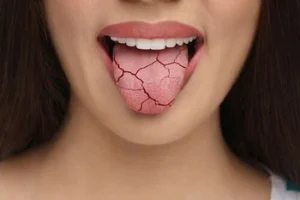 Dry mouth is a symptom and not a disease in itself, so the causes of dry mouth sit outside the mouth more often than in it.
Medicines are the common culprit, since many everyday prescriptions reduce saliva production as a side effect, and taking more than one compounds it. If you suspect a medicine is responsible, do not change your dose, because that conversation belongs with the doctor who prescribed it. Bring your list of medicines to your appointment, and we can adjust your dental care around it.
Some medical conditions affect the salivary glands, including certain autoimmune diseases. Radiation therapy to the head or neck area, and other cancer treatment, can reduce saliva production directly. Dehydration, mouth breathing, snoring and heavy consumption of alcohol or soft drinks all contribute as well.
What Helps
Management works on two fronts: relieving the dry feeling, and protecting the teeth while it persists.
For comfort, drink plenty of plain water throughout the day, not a sweetened drink. Chewing sugar-free gum helps stimulate saliva. Artificial saliva products, sold as gels, sprays and rinses, hold moisture against the soft tissues for longer than water does. A humidifier helps overnight, and lip moisturiser addresses cracked lips.
Some things make it worse. Spicy foods, citrus, salty foods and anything with sharp edges irritate a dry mouth, and alcohol-based mouthwashes dry it further. Breathing through your nose instead of your mouth helps where that is possible.
For your teeth, the protective steps step up. Brush with a soft toothbrush, floss daily, and use a toothpaste and mouthwash with higher fluoride levels. If a toothpaste causes a burning sensation, switch to a milder one instead of persevering. Keep sugary and acidic foods to a minimum, because the usual defence against them is the thing you are short of.
 Book a Check-Up If Your Mouth Feels Dry
Dry mouth changes what your teeth need, and the earlier that is accounted for, the better. At Boutique Dental Care, we check for the oral signs at every oral health examination, and we can talk through the treatment options that suit your situation. Our hygienist can also review your cleaning technique, which matters more when saliva is not helping. If your mouth has felt dry for more than a couple of weeks, we are glad to take a look. To arrange an appointment, please call us on (02) 9054 5281.
Frequently Asked Questions
Does dry mouth get worse at night?
Usually, yes. Saliva flow drops naturally during sleep, so the dryness is often at its worst on waking. Mouth breathing overnight adds to it, which is why a dry mouth in the morning is the common reason it gets raised with us.
Can drinking more water fix it?
Water relieves the sensation without restoring saliva, so it manages the symptom and not the cause. It is still worth doing, and far better than sipping soft drinks or juice through the day, which adds decay risk to an already vulnerable mouth.
How often should I have a check-up if my mouth is dry?
More often than the standard six months in many cases, because decay progresses faster without saliva protecting the teeth. We set the interval based on what your examination shows, and shorten it while the dryness persists. Shorter intervals mean early decay is caught while it can still be arrested with fluoride.
References
https://my.clevelandclinic.org/health/diseases/10902-dry-mouth-xerostomia
https://www.mayoclinic.org/diseases-conditions/dry-mouth/symptoms-causes/syc-20356048