

Losing teeth later in life changes more than how a smile looks, and it changes what you can comfortably eat. Dentures for seniors, also called seniors dentures or dentures for pensioners, are one of the established ways to replace missing teeth. Which type suits you, what the denture is made from, how many appointments it takes, and what it costs all depend on your own mouth. In this blog post, we cover the three types of denture and why replacing missing teeth matters. We also cover how fit is achieved and maintained, what drives the cost, and where funding may help.
Quick Overview
- There are three main types: full dentures, partial dentures and implant-retained dentures.
- Dentures are made from acrylic plastic, or plastic combined with a light metal called cobalt chrome.
- Every denture is custom-made, and it takes several appointments before it fits comfortably.
- Fit changes over time, so annual reviews and occasional adjustments are part of wearing dentures.
Which type suits you depends on how many teeth are missing and the condition of those that remain.
The Three Types of Denture
Among the dental treatments available for missing teeth, dentures set prosthetic teeth into a base that either rests on your gums or attaches to something more solid. That difference is what separates the three options.
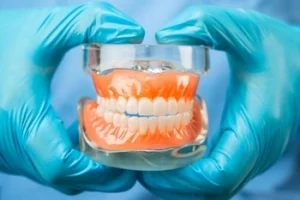
Full dentures. Where all the teeth in a jaw have gone, a full denture replaces the whole arch in the upper jaw, the lower jaw, or both. It sits on the gums and supports your lips and cheeks. It also maintains the distance between your nose, mouth and chin, which reduces over time when a full jaw of missing teeth is not replaced.
Partial dentures. Where some natural teeth remain, a partial denture replaces the gaps and is held in place by metal clasps around the teeth you still have. Partial dentures let you keep your remaining teeth working instead of removing them.
Implant-retained dentures. Also described as implant-supported dentures, these use dental implants placed in the jaw to hold a full denture in position. The denture sits on the implants and the gums, and it still comes out for cleaning. This can be done in the upper jaw, the lower jaw, or both.
Denture materials matter too. The body of a denture is made from plastic, or from plastic combined with a thin, light metal called cobalt chrome. Each material has its own advantages, and material quality affects how the denture wears over years. The teeth themselves can be matched to the colour and shape of your natural teeth.
Why Replacing Missing Teeth Matters
The reasons go beyond appearance, which is why restorative treatments are recommended and not merely offered.
Chewing is the first. A restricted bite pushes you towards softer, more processed food, and that affects nutrition and oral health at an age when both matter. Speaking is the second, since teeth help form certain sounds.
There is a structural reason as well. Where missing teeth are not replaced, the facial muscles sag, and a denture helps fill out the face. Remaining natural teeth also drift into the gaps over time, which changes how the bite meets and makes cleaning harder.
Your dental health and your overall health are connected here. Gum disease around the teeth you still have is the usual reason for further tooth loss. The condition of your gums is therefore assessed before any denture is planned. Where teeth cannot be saved, simple extractions may be needed first.
How Dentures Are Made, and How the Fit Is Achieved
Every denture is custom made for your mouth. Understanding the sequence helps, because it is longer than a single visit.
At the initial consultation, your dentist examines your mouth and your remaining teeth, then takes measurements at the dental clinic. Between appointments, the denture is built in a dental laboratory, and you return for fittings as it takes shape. How many dental appointments you need depends on how many teeth the denture replaces, whether you have worn one before, and whether teeth need removing first.
Where extractions are required, there are two paths. Waiting a few months after removal lets the gums and bone heal, which gives a better starting point and means fewer denture adjustments later. Alternatively, an immediate denture is made while you still have the teeth and fitted on the day they come out. That avoids going without teeth, though it usually needs more follow-up and an earlier replacement.
New dentures feel strange at first. Expect a few months to adapt, starting with soft foods. Small changes to the fit are normal during that period, and they are what get the denture comfortable.
Keeping Dentures Fitting Properly
Fit does not last indefinitely, because your mouth keeps changing.
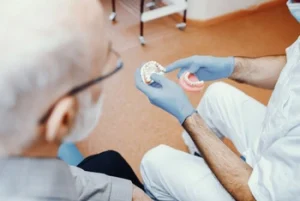 The shape of the gums and jaw alters over the years after tooth loss, so a denture that fitted well when new will loosen. A loose denture causes soreness and makes eating harder. Where that happens, material can be added to the base to restore the fit, which is called a reline. Sometimes a new denture is the sounder answer instead.
Plan on a review at least yearly to confirm the dentures fit properly, even if all your teeth are replaced. Those appointments check the fit and the soft tissues, including for oral thrush and other conditions that can develop under a denture.
Denture care itself is straightforward. Brush morning and night with a separate brush and liquid hand soap, not toothpaste, which is too abrasive for plastic. Clean over a towel or a bowl of water so a drop does no damage. Soaking in a denture cleaning solution removes food particles and bacteria, and the manufacturer’s recommended duration is the one to follow.
Rinse thoroughly with clean water once soaking is done, so no residue is left on the surface. Then air dry them overnight in a ventilated space, which discourages bacterial growth and keeps them fresh for the next day. Taking them out overnight also rests your mouth. Brush your gums and tongue daily as well.
Whether Implants Are an Option for You
Implant dentistry gives more stability than a denture resting on gums alone, and whether it is available to you depends on what sits under the gum.
Bone density is the deciding factor, because implants are anchored in the jaw. Where bone has been lost after teeth have been missing for years, there may not be enough to hold an implant securely. Bone grafting can build the site up in some cases, which adds time and cost to the plan.
The number of implants varies. A single implant will not support a full denture, so several are usually placed across the arch. Treatment runs in stages over months, since the implant needs time to integrate with the bone before the denture is attached.
X-rays are taken first to show the bone and the surrounding structures. That assessment tells us whether implant support is realistic for you, or whether a conventional denture is the sounder option.
What Affects the Cost of Dentures
Denture cost varies depending on several key factors, so a figure only means something once your mouth has been examined.
Treatment costs are shaped by the type of denture, how many teeth it replaces, the denture materials chosen, whether extractions are needed first, and whether implants are involved. Implant work sits well above a conventional denture because of the surgical stage.
We provide a written quote at your initial consultation, itemised so you can see what each part covers. That is the point of asking questions, because it is easier to adjust a plan before it starts.
Payment plans are available where the cost is a financial burden, and we can talk through the options at your appointment. Worth knowing as you compare quotes: a poorly fitting denture creates its own costs later in adjustments and earlier replacement.
Funding, Cover and Eligibility
Several funding routes exist for dental health services like these, and eligibility criteria differ between them.
 Private health insurance. Many extras policies cover dentures in part, though annual limits and waiting periods apply. Check your level of cover before treatment starts, and bring the details so we can quote against them.
Department of Veterans’ Affairs. If you hold a Veteran’s Gold or White Card, dental services including dentures may be claimable, subject to the relevant Veterans’ Affairs pricing schedules. We accept DVA, so bring your card to your appointment.
Concession cards. Holding a pensioner concession card or health care card affects eligibility for government assistance, and the arrangements vary depending on your state. Eligible patients should also be aware that waiting periods for subsidised care can be long, so it is worth asking about timeframes before deciding.
Whichever applies to you, ask for the quote in writing and check it against your cover before agreeing to proceed.
Book an Initial Consultation
Replacing missing teeth starts with an examination, because the type of denture that suits you depends on your gums, your remaining teeth and the bone underneath. At Boutique Dental Care, we are members of the Australian Dental Association and provide comprehensive denture services including full and partial dentures. You will receive a written quote before any treatment begins, and we accept DVA and offer payment plans. If you are considering dentures, or your current set has stopped fitting, we are glad to see you. To arrange an appointment, please call us on (02) 9054 5281.
Frequently Asked Questions
Can I eat normally with dentures?
In time, yes, though the range widens gradually and not all at once. Start with soft foods cut small, chew evenly on both sides, and add firmer textures as your control improves. Very hard or sticky foods stay difficult for some wearers even after months.
Do dentures need adhesive?
Not usually if they fit well, since a properly fitted denture holds by suction and muscle control. Adhesive can help in some cases, and it is worth asking us before relying on it, because a denture needing adhesive to stay put often needs relining instead.
How long do dentures last?
Years rather than decades, and the limiting factor is usually your mouth changing shape, not the denture wearing out. A reline restores the fit where the base no longer matches the gum underneath, and replacement becomes the sounder option once relining stops holding.
Will my speech change?
Briefly, certain sounds take practice with a new denture in place, and reading aloud for a few minutes a day speeds that up. Persistent difficulty after several weeks is worth mentioning, since it can point to the fit instead of adaptation.
What if my denture becomes sore or my gums bleed?
Make an appointment instead of persevering. Soreness, bleeding gums, swelling or an ulcer under a denture all indicate the fit needs adjusting, and continuing to wear it can make the irritated area worse.
References
https://my.clevelandclinic.org/health/treatments/10900-dentures
https://www.colgate.com/en-in/oral-health/dentures/what-are-dentures