

Sugar does not rot teeth directly. Rotten teeth is the everyday phrase for advanced decay, and what happens is a chain reaction involving the bacteria already living in your mouth. That chain explains why when you eat sugar matters more than how much. In this blog post, we cover how decay forms, why snacking matters, where the sugar comes from, what protects teeth, and how decay is treated.
Quick Overview
- Bacteria in plaque convert sugar into acid, and that acid is what damages tooth enamel.
- One acid attack does no lasting harm, while repeated attacks through the day break the enamel down.
- Sugary drinks are the largest source, and sticky sweets hold sugar against teeth for longer.
- Untreated decay is common in Australia, and it affects children’s baby teeth as well as adult teeth.
Below, the mechanism explains why timing matters more than quantity, and why early decay can be stopped.
How Sugar Turns Into Tooth Decay
Plaque is a layer of bacteria that sticks to your teeth, and it forms whether or not you eat sugar. When sugar arrives, those bacteria convert it into acid that draws minerals from your enamel, the hard outer layer of the tooth.
One acid attack softens the enamel briefly, then saliva washes the acid away, and it recovers. That cycle happens daily without harm.
Decay develops when the attacks come faster than the recovery. The first visible sign is often a white spot, not a hole, and holes deepen from there until the decay reaches the nerve. Dental caries is the term your dentist will use.
Australian figures put 1 in 3 adults over 15 with untreated tooth decay, and about 1 in 3 children under 5 with decay in their baby teeth.
Snacking Matters More Than Serving Size
 Eating a whole dessert after dinner produces one acid attack. Grazing on the same sugar across an afternoon produces five or six, and your saliva never catches up.
Frequent snacking raises decay risk alongside a diet high in sugary foods, and high sugar intake is linked to obesity as well. Sweets are less harmful at mealtimes, since chewing increases saliva flow and clears acid faster.
Bedtime is the exception. Saliva flow drops overnight, so sugar close to sleep sits against the teeth for hours.
Where the Sugar Comes From
Soft drinks, cordial and fruit juice are the largest contributors, and sports and energy drinks belong in the same group. Sugar-free versions are not automatically kind to teeth, since many are acidic enough to soften enamel.
Sticky foods are another concern. Dried fruit, honey, syrups and chewy sweets cling to tooth surfaces and to the grooves in back teeth, which extends how long the acid keeps forming. Fruit juice is not equivalent to whole fruit either, since juicing releases the sugars and removes the fibre.
What Protects Teeth
None of this requires cutting sugar out, only changing when it is consumed.
The Australian Dental Association recommends brushing twice a day with fluoride toothpaste, flossing daily, a healthy diet low in added sugar, and regular check-ups. After brushing, spit out the excess and do not rinse, so a layer of fluoride stays on the tooth surface. Between meals, plain milk and tap water are the sensible choices, since tap water is fluoridated across much of Australia.
Building meals around vegetables and slower-releasing carbohydrates leaves fewer opportunities for acid to form than grazing does. Keeping sweets to mealtimes and special occasions protects enamel more than any change to your toothpaste will. Children need closer attention, because their enamel is softer and thinner, so for a parent the early years matter more than later ones.
How Tooth Decay Is Treated
Treatment depends on how far the decay has progressed, which is why the timing of a check-up matters.
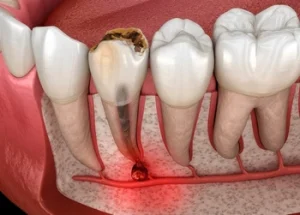 Early decay, where a white spot has appeared but no hole has formed, can often be stopped. We apply fluoride paste or varnish, and with improved brushing and a lower-sugar diet, the enamel can recover. Nothing is drilled at this stage.
Once a cavity has formed, the tooth needs a filling, because enamel does not grow back. Decay reaching the nerve needs root canal therapy, and a tooth too damaged to save may need removing. Tooth loss carries its own consequence, since neighbouring teeth drift into space.
For teeth with deep grooves that are hard to clean, we can apply a fissure sealant to healthy enamel as a preventive measure.
Book an Oral Health Examination
Early decay produces no symptoms, which is why it is usually found at a check-up rather than reported by the patient. At Boutique Dental Care, our dentists examine for decay at every oral health examination, and our hygienist can talk through the habits affecting your teeth. If you are due for a check-up, or have noticed a mark or sensitivity, we are glad to help. To arrange an appointment, please call us on (02) 9054 5281.
Frequently Asked Questions
Does rinsing with water after sugar help?
It dilutes the acid a little, though it does not replace brushing. Avoid brushing straight after anything acidic, since softened enamel wears away more readily.
Are natural sugars like honey safer for teeth?
No. Bacteria in plaque treat honey the same way they treat table sugar, and honey is stickier, so it stays on teeth for longer. What matters is frequency and stickiness, not whether the sugar is refined.
Do fillings need replacing over time?
Usually, yes. Fillings face chewing forces and the same bacteria as the rest of the tooth, so they have a working life. We check existing fillings at each examination for wear or for decay at the edges.
References
https://www.colgate.com/en-us/oral-health/cavities/too-much-drilling-not-all-early-tooth-decay-needs-a-filling
https://time.com/3380563/sugar-tooth-decay/