

Root canal treatment saves a tooth from extraction. But once the procedure is done, many patients face a second question: does the treated tooth also need a crown?
The answer is not always the same. Whether a crown is required after root canal treatment depends on several factors your dentist will assess: which tooth was treated, how much natural structure remains, and the forces that tooth bears when you chew. Understanding those factors can help you have a more informed conversation at your next appointment.
Dental crowns and bridges are one of the most common restorations recommended after this procedure, and the decision about which type of restoration is right depends on your individual circumstances.
Quick Overview
- A crown is a custom-made cap placed over a tooth to restore its shape and protect it from breaking.
- A crown is often recommended after root canal treatment, particularly for back teeth that bear heavy chewing forces.
- Crowns can reduce the risk of fracture in a root canal-treated tooth by protecting the remaining tooth structure.
- The tooth’s location, how much structure remains, and individual bite forces all affect whether a crown is needed.
- Your dentist will assess the tooth using clinical examination and X-rays before recommending a filling or a crown.
Below, we explain what root canal treatment does to a tooth, why a crown is often part of the follow-up plan, and when it may not be needed.
What Does Root Canal Treatment Do to a Tooth?
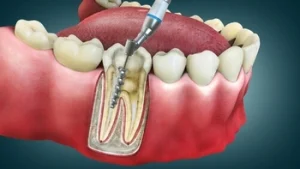 Root canal treatment removes infected or damaged pulp from inside the tooth. The pulp contains nerves and blood vessels. When this soft tissue becomes diseased, it is cleaned out, the canals are shaped and disinfected, and the space is sealed.
After root canal treatment, the tooth is restored with a filling or crown to protect it and restore function.
Once the pulp is removed, the tooth no longer receives its internal blood supply. Over time, this can make the tooth more brittle than a vital tooth. It is still functional, but the structure behaves differently under load. This is why restoration after root canal treatment is not optional: the decision is which type of restoration is most appropriate.
Do You Always Need a Crown After a Root Canal?
Not always. The need for a crown after root canal treatment depends on your individual situation.
For many root canal-treated teeth, particularly molars and premolars at the back of the mouth, a crown is the restoration most commonly recommended. These teeth absorb the bulk of chewing pressure, and without coverage, a treated tooth may be more prone to fracture. Delaying the final crown or filling after root canal treatment increases the chance of the tooth breaking or needing to be removed.
For front teeth, the picture can be different. If a front tooth has retained most of its natural structure after treatment, a bonded filling or core build-up may be a suitable alternative. Individual outcomes vary and will depend on your specific tooth and clinical circumstances.
Crown Placement and Tooth Survival
Teeth that went without a crown after root canal treatment were six times more likely to be extracted than those that received one.
For root canal treated teeth that were crowned, survival rates of 92.3% at five years and 83.8% at ten years have been reported across a sample of over 160,000 treated teeth.
Individual outcomes depend on oral hygiene, the specific tooth, bite forces, and other personal health factors. No population data can predict what will happen in any individual case.
What Happens If You Skip the Crown?
Delaying or skipping a crown after root canal treatment carries risks. A root canal treated tooth protected only by a temporary filling is more exposed to:
- Fracture under normal chewing forces
- Bacterial re-entry through a gap or crack in the temporary restoration
- Vertical root fracture, which can result in the loss of the tooth
In most cases, the dentist will place a temporary filling immediately after root canal treatment to protect the tooth while the permanent restoration is being planned or fabricated. The permanent crown or filling typically follows within a few weeks.
How to Care for a Root Canal Treated Tooth
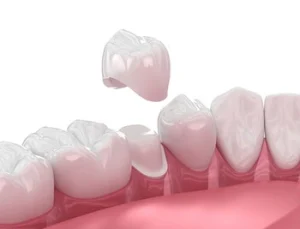 Whether or not a crown is placed, the long-term health of a root canal-treated tooth depends largely on how it is maintained.
- Brush twice daily with a fluoride toothpaste
- Floss once a day, including around any crown margins
- Attend regular dental check-ups so the restoration can be monitored
- Avoid using the treated tooth to bite hard objects such as ice or hard packaging
- If you clench or grind at night, ask your dentist about a night guard
A crowned tooth does not require special treatment beyond these standard oral hygiene practices. The crown itself does not decay, but the tooth structure beneath it can if the gum line or margins are not kept clean.
A Considered Approach to Restoring Your Tooth
Deciding whether to place a crown after root canal treatment is a clinical decision that takes into account your tooth, its location, the extent of the procedure, and your overall oral health. It is not a one-size-fits-all recommendation.
If you have recently had root canal treatment or are in the process of planning one, it is worth discussing the restorative pathway with your dentist before the procedure begins. Knowing the full treatment plan ahead of time helps you understand what is involved and what to expect at each stage.
To arrange a consultation at Boutique Dental Care in Chatswood, call (02) 9054 5281 or book an appointment online.
Note: Any surgical or invasive procedure carries risks. Before proceeding, you should seek a second opinion from an appropriately qualified health practitioner.
Frequently Asked Questions
How long after a root canal do you need to get a crown?
Most dentists recommend placing the permanent crown within a few weeks of completing root canal treatment. During that time, the tooth is usually protected by a temporary filling. Delaying the permanent restoration increases the risk of the tooth fracturing or bacteria re-entering the treated area. The timeline will depend on your individual situation and your dentist’s assessment.
What happens if you don’t get a crown after a root canal?
A root canal-treated tooth without a crown is more vulnerable to fracture, particularly if it is a back tooth. It is also at greater risk of bacterial re-entry if the temporary filling cracks or wears. In some cases, a tooth lost to fracture after root canal treatment cannot be saved and may require extraction. For teeth where a crown is clinically indicated, delaying or skipping it can affect the long-term outcome of the treatment.
Do front teeth need a crown after root canal treatment?
Not always. Front teeth are subject to less chewing pressure than back teeth, and if a front tooth retains most of its natural structure after treatment, a bonded filling or core build-up may be appropriate. However, if significant structure was lost during the root canal procedure, or if the tooth is at risk of discolouration or further damage, a crown may be recommended. Your dentist will advise based on the specific condition of the tooth.
References
Healthdirect Australia. (2025). ‘Root canal treatment’. Healthdirect Australia. Sydney, NSW: Australian Government. https://www.healthdirect.gov.au/root-canal-treatment
Healthdirect Australia. (2025). ‘Dental crown procedure’. Healthdirect Australia. Sydney, NSW: Australian Government. https://www.healthdirect.gov.au/dental-crown-procedure
Teeth.org.au. (n.d.). ‘Root canal treatment’. Teeth.org.au. Australia: Australian Dental Association. https://teeth.org.au/root-canal-treatment
Yee, K., Bhagavatula, P., Stover, S., et al. (2018). ‘Survival rates of teeth with primary endodontic treatment after core/post and crown placement’. Journal of Endodontics, 44(2), 220-225. Bethesda, MD: National Center for Biotechnology Information. https://pubmed.ncbi.nlm.nih.gov/29229456/